What Are Superstitions, Really?
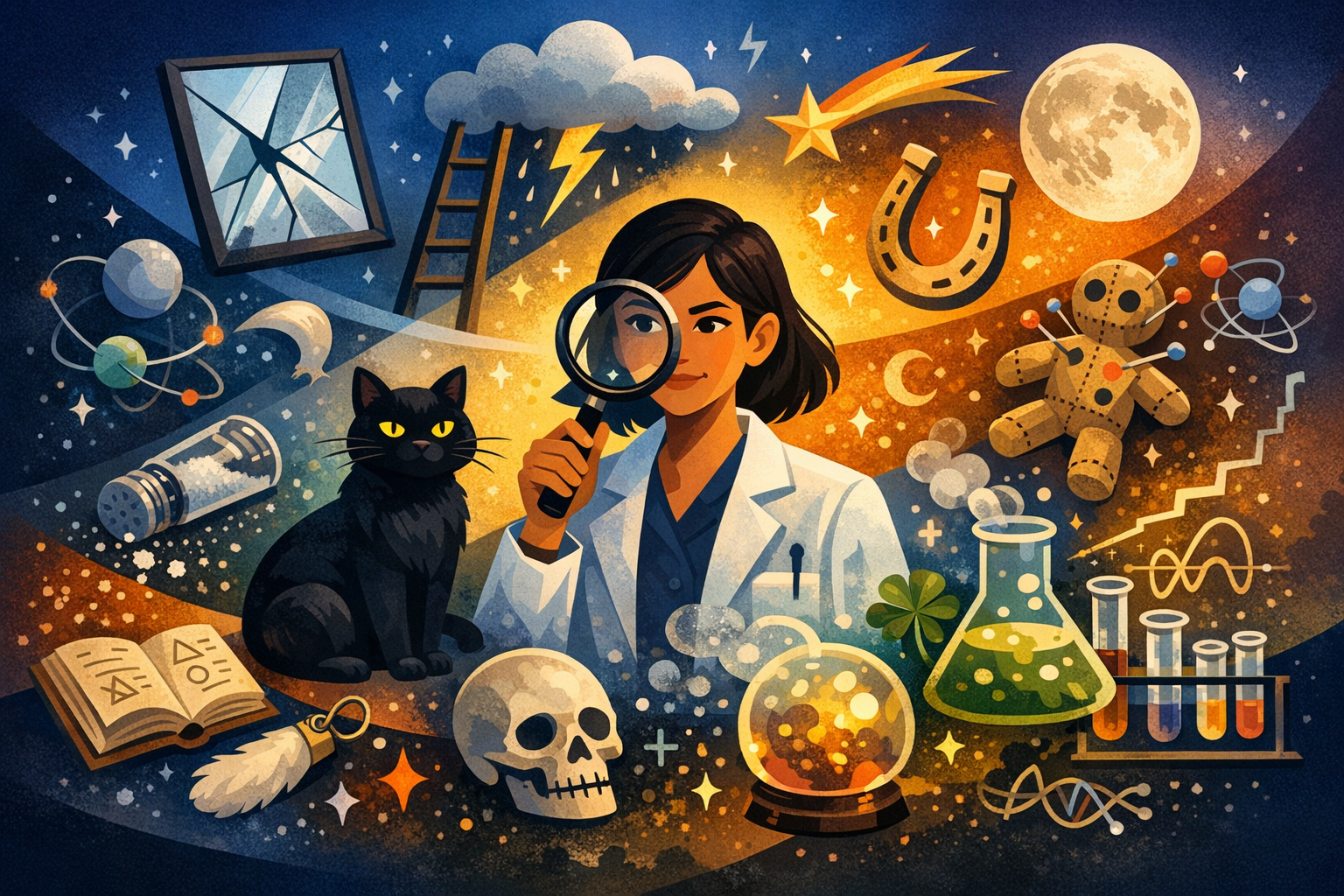
Superstitions are like those quirky relatives at family gatherings—they're ever-present, slightly mysterious, and oddly endearing despite their peculiarities. But what makes us knock on wood or avoid walking under ladders? At their core, superstitions are beliefs or practices that arise from ignorance, fear of the unknown, or a trust in magic rather than science. But their roots dig much deeper into the soil of human psychology and culture.
The Psychological Backbone of Superstitions
Our brains are hardwired to identify patterns and create associations, even when none exist. This cognitive tendency is a survival mechanism from our evolutionary past. Imagine our ancestors. If they heard rustling in the bushes, it was safer to assume it was a predator than to dismiss it as the wind. This ‘better safe than sorry’ approach has trickled down to our modern-day psyches, morphing into a belief system that can sometimes seem irrational.
Superstitions also provide a sense of control in unpredictable situations. Dr. Stuart Vyse, a psychologist specializing in irrational behavior, notes that superstitions often surface when there's a lack of predictability or control, such as in sports or gambling. A lucky charm or a ritualistic routine can offer a comforting illusion of control, boosting confidence and reducing anxiety.
The Role of Culture and Tradition
Superstitions are deeply embedded in cultural rituals and traditions, passed down through generations like a cherished family recipe. Anthropologically, they serve as social glue, bonding communities with shared beliefs and practices. These customs often originate from historical events or religious beliefs, evolving over time into the superstitions we recognize today.
Consider the number 13, often seen as unlucky in Western cultures. This superstition is entrenched in historical and religious contexts, from Judas being the 13th guest at the Last Supper to Norse mythology’s unlucky 13th god, Loki. Yet, in some cultures, like the Chinese, the number four is avoided because it sounds like the word for death. These differences highlight how superstitions are not universally shared but are a product of cultural narratives.
Do Superstitions Affect Behavior?
Absolutely! Superstitions can significantly influence behavior, often in subtle ways. A study published in the journal Psychological Science found that people who engage in superstitious behavior tend to perform better than those who don’t, thanks to increased self-confidence. Athletes, for instance, might wear a 'lucky' piece of clothing during competitions, believing it enhances their performance.
Moreover, superstitions can impact decision-making processes. For example, someone might choose not to invest in a business venture due to an astrologer’s warning or a tarot reading. While these beliefs might seem irrational, they highlight the powerful role superstitions play in shaping our choices and actions.
The Persistence of Superstitions in a Scientific World
In an age dominated by science and technology, one might expect superstitions to fade into obscurity. Yet, they persist, a testament to their resilience and adaptability. They continue to offer comfort and a semblance of order in a chaotic world, acting as a psychological balm during uncertain times.
Furthermore, the digital age has given rise to new forms of superstitions. From social media algorithms to phone notifications, we ascribe meaning and patterns to digital occurrences, reminiscent of traditional superstitious beliefs. Have you ever refreshed your email in a specific sequence hoping for different results? Welcome to modern superstition!
The Takeaway
Superstitions, whether rooted in ancient traditions or modern-day rituals, are more than just quirks—they are a fascinating intersection of psychology, culture, and human behavior. They remind us that while we may live in an era of unprecedented scientific understanding, the need for belief in something greater than ourselves continues to thrive.
So, next time you find yourself crossing your fingers or avoiding that ominous-looking ladder, take a moment to appreciate the rich tapestry of history and psychology woven into that simple act. After all, as humans, we're all just a little bit superstitious.